I treated myself to a second hand copy of Grant Petersen’s “Just Ride”, which he subtitles, “A Radically Practical Guide to Riding Your Bike”‘. I am enjoying it and it makes a great ‘dip in when you have a moment’ book which is full of refreshing insights into cycling.
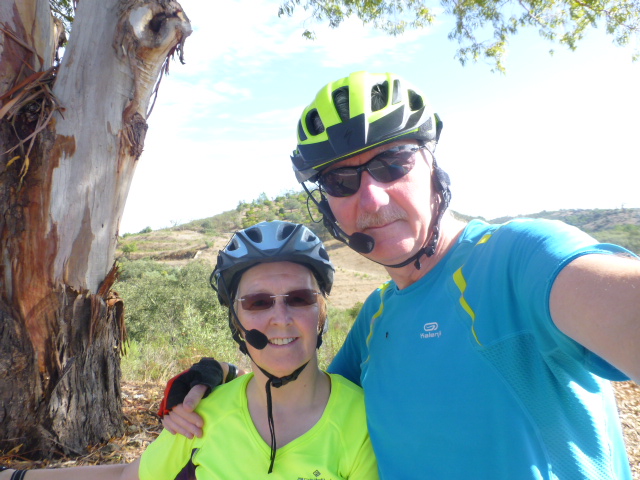
The chapter on helmet wearing got under my skin however. OK, I’m biased. I always wear a helmet when I ride. Always. Whether I’m commuting to the shops, road cruising for fitness, or tackling gravel trails – my helmet goes on before I leave the house. This has been my routine for maybe 20 years or more. I was an early helmet adopter. Now I literally won’t leave home without one. So when I read Grant Petersen’s take on the need to debate helmet wearing, I had strong opinions. Let me share them with you.
Petersen’s Take
Petersen acknowledges the safety arguments for helmets are, “boringly well known.” Fair enough. But then he pivots to something more controversial: maybe helmet wearing makes us less safe overall.
His underlying theory rests on the idea of risk compensation. Basically, he says that when we strap on a helmet, we feel protected, so we take more risks. We ride faster, brake later, get a bit bolder. Further, he points out that helmets aren’t designed or tested for the kinds of real-world crashes we actually experience.
His provocative question is then: Are we safer wearing a helmet and riding recklessly, or safer riding without one because we then stay hyper-cautious?
The Risk Compensation Theory Sounds Plausible… But Doesn’t Hold Up
I get the logic. It feels true that feeling protected might make you less careful. But here’s the thing: the evidence doesn’t support it.
If helmets really made cyclists so reckless that the protection was cancelled out, we wouldn’t see any reduction in head injuries among helmet wearers. But we do—lots of it. Meta-analyses consistently show helmets reduce head injury risk by 50-70%. If risk compensation were a major factor, those numbers would be tiny or non-existent.
Real Riders Don’t Actually Act This Way
Think about your own riding habits. Did you suddenly start bombing down hills or running red lights the day you put on a helmet? Probably not. Most of us ride the same routes, at similar speeds, making the same decisions whether we’re wearing a helmet or not. We long ago arrived at a riding style that provides us with a comfortable level of feeling safe.
Our cycling behavior is mostly habitual and shaped by our environment—not by some mental calculation about how much risk our foam hat allows us to take. The idea that a helmet transforms cautious riders into daredevils just doesn’t match reality.
The Helmets “Not Tested for Real Life” Argument
Petersen’s right that helmet testing standards aren’t perfect. They test specific impact scenarios, not every possible crash you might experience.
But here’s the thing: this is true of every safety device ever made. Seatbelts aren’t tested for every conceivable car crash. Motorcycle helmets can’t simulate every type of accident. The question isn’t whether helmets protect against all injuries in all situations—it’s whether they improve outcomes in common crash scenarios. And they do.
Most Cycling Crashes Are Actually Pretty Simple
Many cycling accidents are relatively low-speed falls—tipping over at a stoplight, hitting a pothole, misjudging a curb. These are exactly the situations helmets are designed for. You don’t need race-car-level engineering to prevent a cracked skull from a simple tumble.
The Big False Choice
Here’s where Petersen’s argument really breaks down for me. He presents this as an either/or decision: helmet plus risky behavior versus no helmet plus maximum caution.
That’s a false binary. The actual choice is: ride cautiously AND wear a helmet. You don’t have to pick between defensive cycling and head protection. They work together, not against each other.
Shifting the Blame
There’s also something subtle happening in Petersen’s framing. By suggesting cyclists should skip helmets to “stay sharp,” he’s implying crashes are mostly due to rider error. But plenty of collisions happen to cautious, experienced cyclists through no fault of their own.
Inattentive drivers. Road hazards. Mechanical failures. A dog darting out. Sometimes stuff just happens. A helmet won’t prevent all injuries, but it’s cheap insurance for the accidents you can’t avoid through skill alone.
What Petersen Gets Right (And It’s Important)
To be fair, Petersen has a point buried in here. The helmet debate does distract from much bigger safety issues.
Protected bike lanes, lower speed limits, better infrastructure, stricter enforcement of traffic laws—these things would save far more cyclists than universal helmet use ever will. If we obsess over personal protective equipment while ignoring systemic dangers, we’re missing the big picture.
But It’s Not Either/Or
Here’s the thing: you can advocate for better infrastructure and acknowledge that helmets reduce injury severity. These positions aren’t contradictory. We need both.
Waiting for perfect bike lanes before protecting your head is like refusing to wear a seatbelt until all roads are perfectly maintained. Sure, better roads would help. But in the meantime, buckle up.
Summing up: My Bottom Line
Petersen’s argument relies on speculative psychology (risk compensation) over demonstrable outcomes (injury reduction). The evidence is clear and consistent: helmets work when you need them.
Riding without one because you’ll “be more careful” is like driving without a seatbelt because you’ll pay more attention. Maybe you will. But when the unexpected happens—and it does—you’ll wish you had the protection.
I’ve been wearing my helmet for decades now. It’s as automatic as putting on shoes. And honestly? I don’t feel invincible or reckless when I wear it. I just feel… ready to ride.
So yeah, I’m keeping my helmet. How about you?


 Pedalling on Regardless
Leave a comment