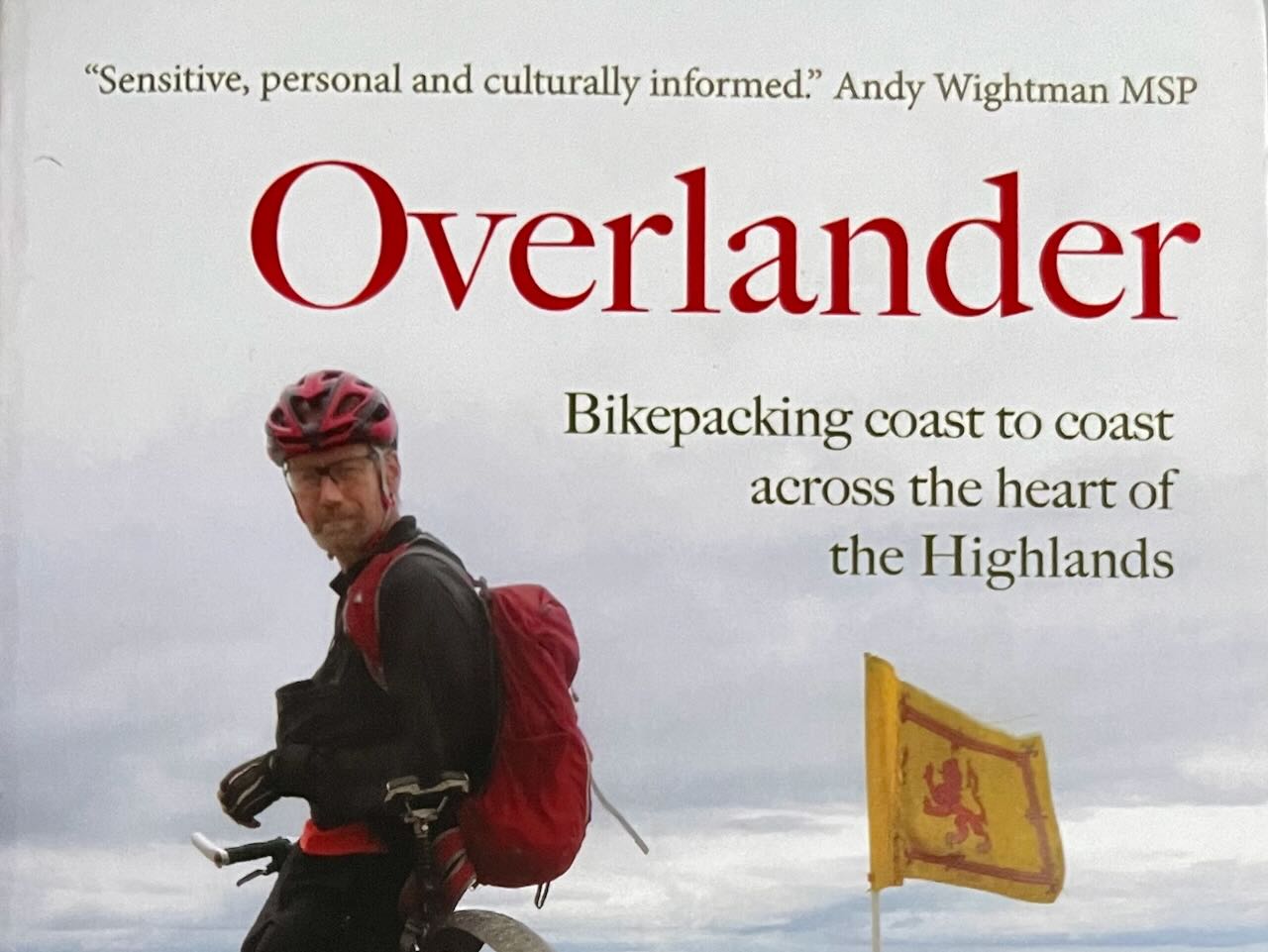
A friend of Alan’s alerted me to this book and I am very glad she did. I have read it a couple of times now and enjoyed it even more the second time around.

Sometimes the best adventures are the ones closest to home. In Overlander, Alan Brown proves this beautifully with his coast-to-coast bikepacking journey through the Scottish Highlands. His is an account that’s in equal parts physical challenge, environmental meditation, and quiet, thoughtful protest against the state and management of Scotland’s wild places.
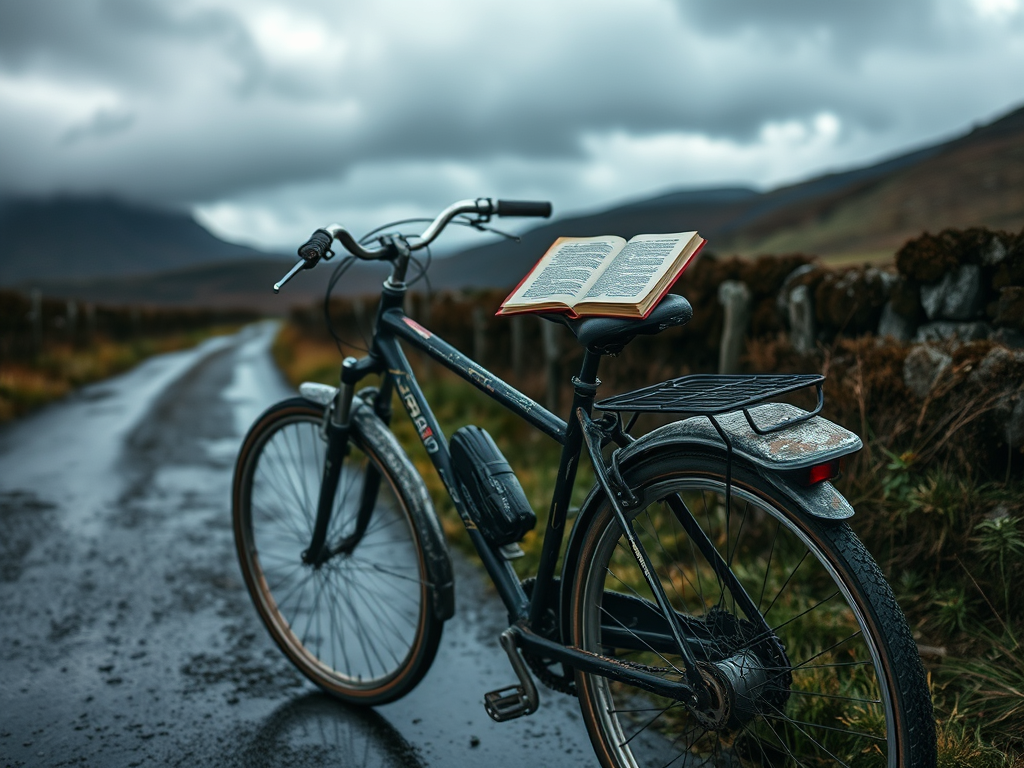
Alan’s route takes him from Loch Etive in Argyllshire all the way to the Moray Firth at Findhorn. En route, he threads his way through remote Rannoch Moor, the dramatic Grampians, and the beautiful glens of Strathspey. What makes his journey special isn’t just the spectacular scenery – though there’s plenty of that – but his deliberately low-tech approach. He rides his 15-year-old commuter bike, the same one he’s cycled to work on for years, loaded with basic camping gear. No fancy titanium frames or thousand-pound kit here. Just a serviceable bike, some chunky tyres, and a willingness to embrace the rhythm of ride, – eat, sleep, repeat. There is at least one lesson for me lurking here.
The physical challenges are real enough – loose tracks, unpredictable weather, and the relentless grind of pedalling across moorland with a loaded bike. But Brown’s writing never gets bogged down in macho suffering. Instead, he captures those hypnotic moments when the landscape seeps into you, when you’re standing still and letting the special familiarity of Scotland’s hills work their magic.
What lifts Overlander beyond a simple adventure narrative is Alan’s keen eye for how humans have shaped these landscapes. As he cycles through vast grouse moors and deer estates, he can’t help but notice the ecological damage they bring. These aren’t pristine wildernesses—they’re carefully managed sporting estates where deer numbers are kept artificially high for hunting, preventing woodland regeneration and damaging the very ecosystems they claim to protect. Brown argues persuasively that these miles of bleak moorland aren’t just bad for nature; they’re actively putting people off exploring their own countryside. As a result alternative types of employment and resources are lost to the local community.
His environmental concerns run deeper than just complaining. Alan has a chemistry background, and brings scientific understanding to what he’s witnessing. He sees paths that could reconnect an urbanized population with the natural world, if only land management priorities would shift away from supporting private sport shooting toward broader public access and ecological restoration.
The beauty of Overlander is that it never gets preachy. Alan’s tone stays curious and reflective, as he knits together observations about bothies, wildlife, and the subtle clues of past lives embedded in the landscape. He’s traced a route through Scotland’s backroads that most of us didn’t know existed, and he’s done it on a bike that cost less than a weekend’s hotel bills.
Overlander is an inspiring read that makes you want to dig out that old bike from the garage and see what’s actually out there—not in New Zealand or Canada, but right here on your doorstep. It deserves to be a big success and I highly recommend it. It certainly spurs me on to hone my trail riding skills.



Leave a Reply